
Forum Review | Attracting Visitors and Winning Their Hearts: What Is the Key to Retaining Customers in a Trillion-Yuan Market?
2026-07-23
In the first quarter, the number of people entering and exiting the country exceeded 21.33 million, a year-over-year increase of 22%; visa-free entries exceeded 8.31 million, up nearly 30%. Behind this surge in travel, a trillion-level inbound tourism market is rapidly taking shape. To date, China has unilaterally granted visa-free entry to 50 countries, established comprehensive mutual visa-free arrangements with 29 countries, and expanded the number of visa-free transit ports to 65. These booming figures are encouraging, and all eyes are on how to capitalize on these market opportunities.
On the afternoon of May 22, 2026, one of the core forums of the 34th Guangzhou International Travel Fair (GITF)—the 4th Inbound Tourism Forum—was held in the forum area of Hall 16.2, Area C, at the Canton Fair Complex. Under the theme “The Next Stop for the Trillion-Yuan Inbound Tourism Market—Quality, Experience, and Emotional Resonance,” the forum brought together representatives from government regulatory authorities, international tourism destinations, leading cultural and tourism enterprises, and industry experts. They engaged in a warm, in-depth, and resonant dialogue on hot topics such as facilitating inbound tourism, enhancing service quality, and building destination brands.
Part.1
From “Traffic” to “Retention”
How Did Guangzhou Do It?
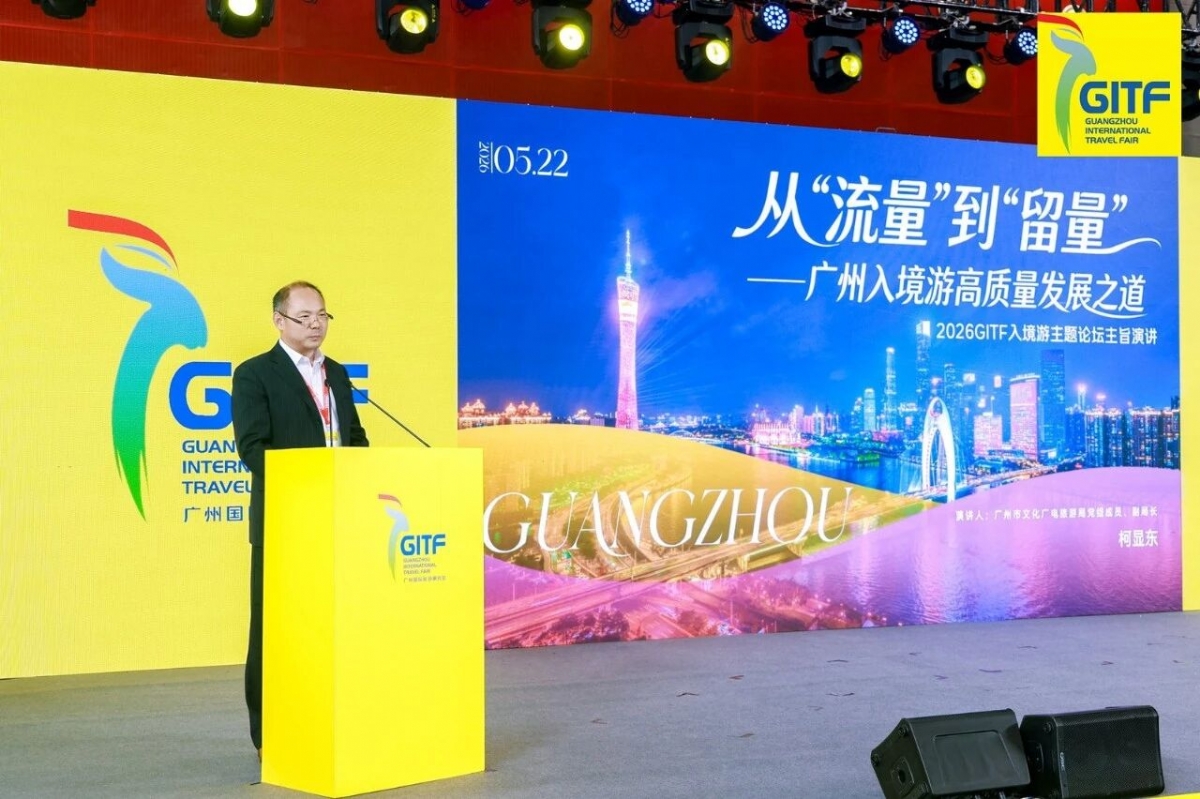
Ke Xiandong, Deputy Director of the Guangzhou Municipal Bureau of Culture, Radio, Television, and Tourism
At the start of the forum, Ke Xiandong, Deputy Director of the Guangzhou Municipal Bureau of Culture, Radio, Television, and Tourism, delivered the opening speech titled “From ‘Traffic’ to ‘Retention’—The Path to High-Quality Development of Inbound Tourism in Guangzhou.” As the host city of the GITF, Guangzhou’s experience as a gateway hub city drew significant attention. Ke Xiandong began by using a set of statistics to illustrate the strong momentum of Guangzhou’s inbound tourism: By 2025, Guangzhou is projected to welcome 2.6 million overnight foreign visitors (according to cultural and tourism statistics), with port statistics reaching 3.2 million. This clearly demonstrates Guangzhou’s increasingly prominent role as an international hub city, as many international visitors enter through ports in Beijing and Shanghai and then travel to Guangzhou as part of a “multi-stop itinerary.” The top source markets—including the United States, Singapore, Malaysia, India, Russia, Japan, Australia, Saudi Arabia, South Korea, and Indonesia—all showed robust growth: “Saudi Arabia saw a 77% increase last year, while Singapore grew by 64%. It is clear that the visa-free policy has had a significant impact,” Ke Xiandong noted.
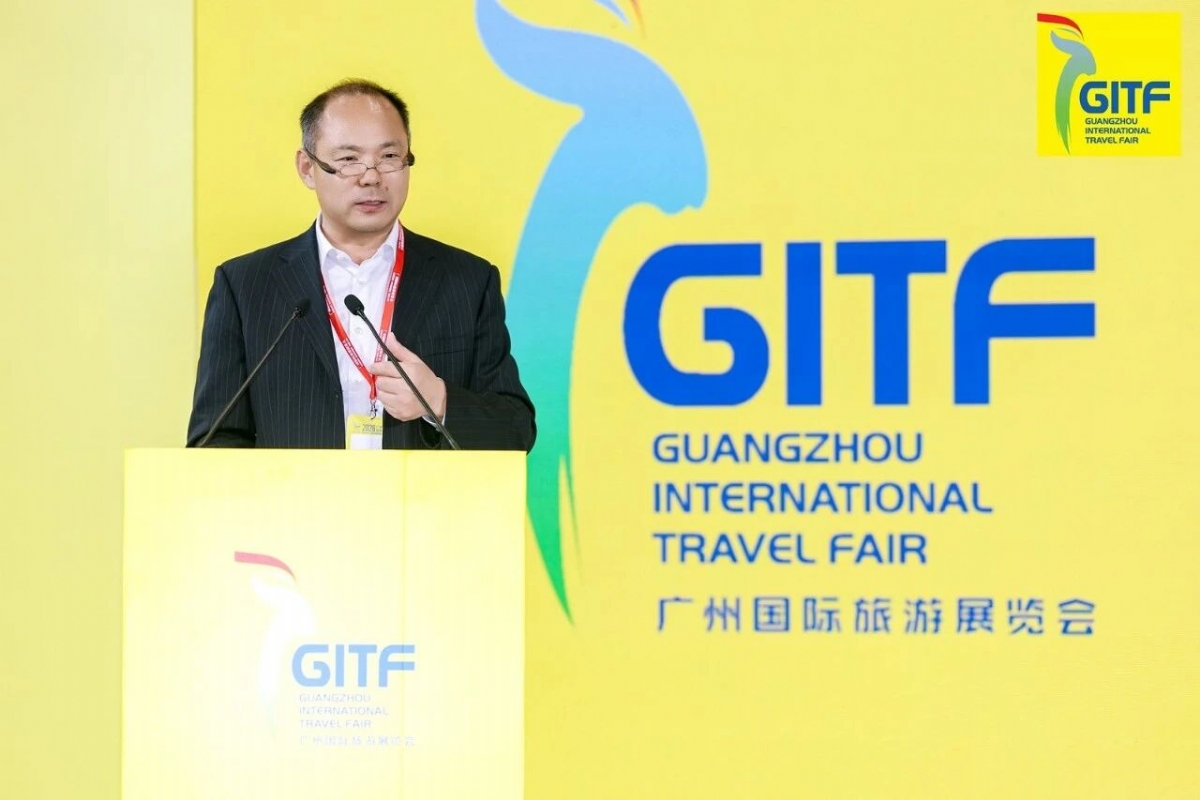
What is driving the strong growth of inbound tourism in Guangzhou? Ke Xiandong summarized: “Inbound tourism relies first and foremost on favorable policies.” First is convenience: Guangzhou has benefited from visa facilitation. As an international hub and a “Millennium Commercial Capital”—the only city in the world to hold this title—Guangzhou has served as a port of entry for over 2,000 years. From visa and accommodation conveniences to payment, transportation, and daily life, Guangzhou is well-prepared in every aspect. Second is quality. In recent years, at least 2,000 foreign media presenters have visited Guangzhou on their own initiative, specifically wandering the streets and alleys to visit places popular with locals and share authentic glimpses of daily life. When one person lost their backpack, a staff member reassured them, “Don’t worry, we’ll definitely find it in a few hours”—something they found incredible. This exemplifies a safe environment and high-quality service. Additionally, “emotional resonance”—that is, personalized and exceptional value-for-money service—is also a hallmark of Guangzhou. Immersive performances and experiences have become particularly popular in recent years, and Guangzhou has made significant efforts in this area. For example, the city has maintained overseas promotion centers for many consecutive years, establishing them in 20 major source countries and cities. Online promotion has also continued uninterrupted, as Guangzhou has consistently developed IP brands such as the “Guangzhou International City Concept,” “Guangzhou Culture Week,” and “Silk Road Flower Language.” Through more than a decade or two of sustained development, their influence has grown steadily. “We are willing to work with everyone to pool resources, create more IPs, and build more brands. We are also willing to collaborate with sister cities to grow our shared pie, tell China’s story well, and tell the stories of our respective cities effectively,” said Ke Xiandong.
Part.2
“Eight Ones” Full-Chain Facilitation
What Does the Hangzhou Plan Entail?
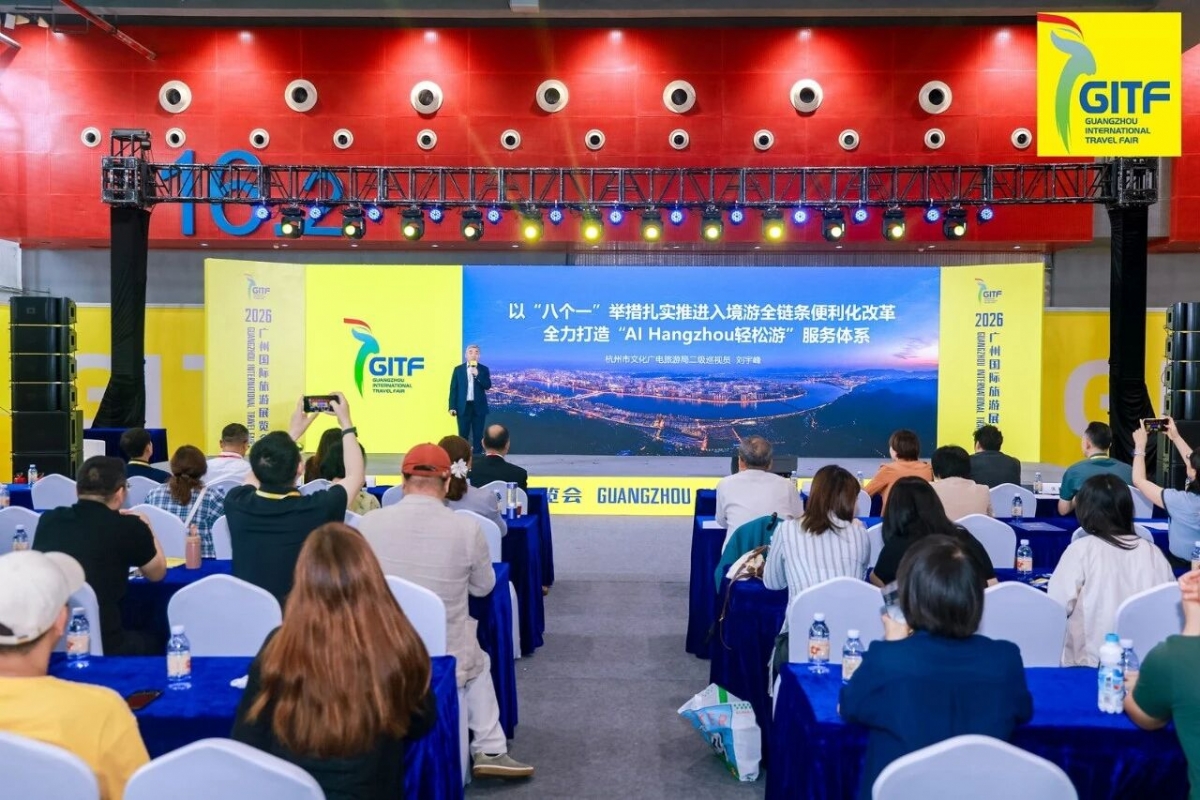
“Above is Heaven; below are Suzhou and Hangzhou.” Following this, Liu Yufeng, a Second-Level Inspector with the Hangzhou Municipal Bureau of Culture, Radio, Television, and Tourism, delivered a keynote speech titled “Solidly Advancing Full-Chain Facilitation Reforms for Inbound Tourism Through the ‘Eight Ones’ Measures: Making Every Effort to Build the ‘AI Hangzhou Easy Travel’ Service System,” in which he introduced the “Hangzhou Plan” for attracting inbound tourists.
As one of the first National Historical and Cultural Cities, Hangzhou is home to three UNESCO World Heritage Sites—West Lake, the Grand Canal, and Liangzhu—and, leveraging its digital strengths, has introduced eight major public service initiatives:
1. “One-Code” Clearance for Inbound Travelers: Early last year, an International Service Center was established directly across from the inbound elevators at Xiaoshan Airport Customs. In collaboration with provincial and municipal public security, customs, and airport authorities, the center provides travelers with one-stop services for payments, visas, telecommunications, and tourist information.
2. “All-in-One” Internet Access: At the service center, international visitors can purchase a SIM card in person or apply for an eSIM online before arrival, allowing them to access overseas social media sites without any issues after entering the country.
3. “One-Stop Cross-Border Payment”: 21,000 POS terminals capable of processing foreign cards have been installed at merchants citywide, and upgrades in key areas have been completed; 4,429 ATMs capable of accepting foreign cards have been deployed; and 160 foreign currency exchange locations have been established, with all four-star and higher-rated hotels offering foreign currency exchange services. The goal is to create a diverse and inclusive payment environment that encompasses foreign card acceptance, foreign currency exchange, mobile payments, and cash services.
4. “One-Touch Check-In” for Accommodations: After entering the relevant information online, visitors can simply “tap” their device at the hotel front desk to receive their room key; at two hotels, guests can even “tap” their phones to enter their rooms directly. Currently, “mobile check-in” is available at more than 10,000 accommodation facilities and has been used by over 1 million people.
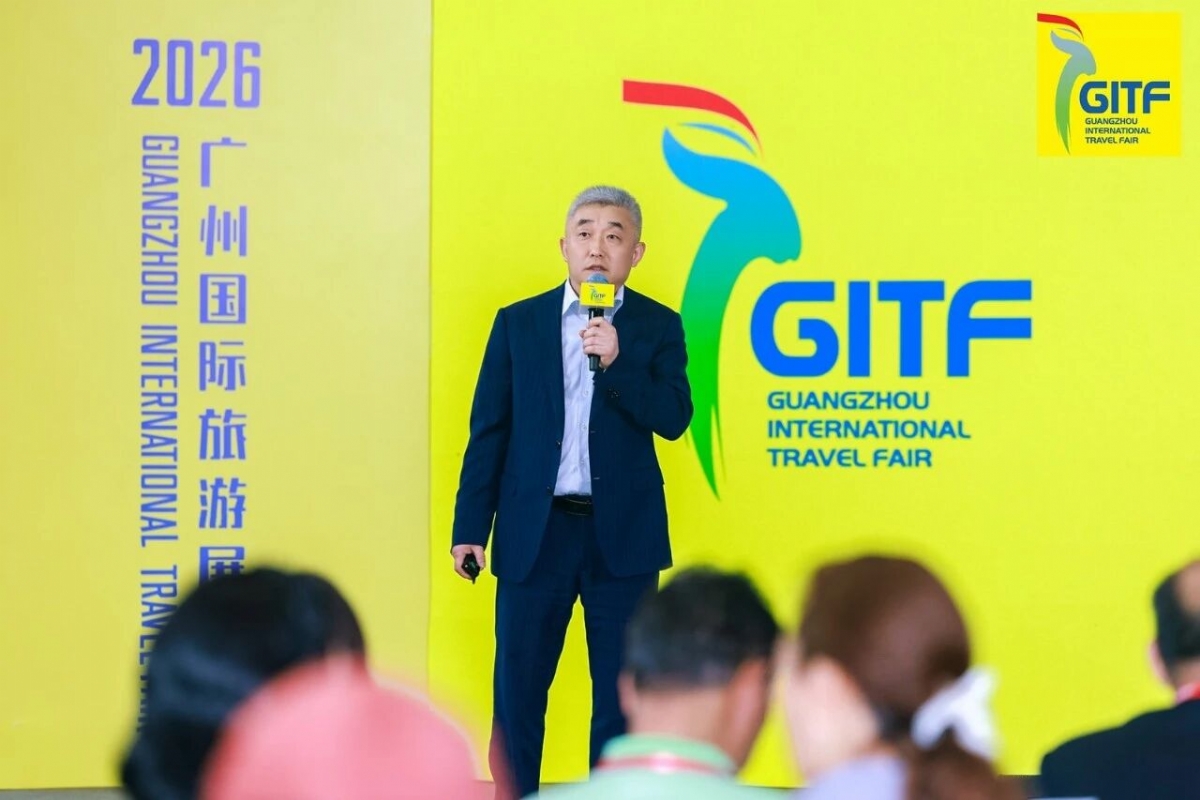
Liu Yufeng, Second-Level Inspector, Hangzhou Municipal Bureau of Culture, Radio, Television, and Tourism
5. “Yida Tong” Luggage Delivery: Two years ago, the city pioneered the “Easy Travel” luggage service reform—the first of its kind in the country. Luggage can be shipped directly from hotels, tourist attractions, commercial districts, and subway stations to high-speed rail stations and airports. With 323 luggage storage service points established citywide, this service has been recognized by the Ministry of Transport and the Ministry of Culture and Tourism as a model case of transportation-tourism integration and has been rolled out in over 30 cities and 110 high-speed rail stations nationwide.
6. “One-Click” Itinerary Planning: “Hang Xiaoyi,” the AI assistant on the “Discover Hangzhou” mini-program, interacts with visitors to help plan itineraries and recommend attractions. A new “Village Tour” feature was added this year, allowing users to generate a personalized itinerary with a single click simply by describing their travel goals.
7. “Companion Along the Way” Information and Guided Tours: We have continuously improved “Hang Xiaoyi” to enhance its capabilities in foreign language conversation, intelligent guided tours, route recommendations, information services, and complaint handling. This year, we will upgrade it to a multilingual version and have launched service products that integrate hardware and software, such as AI smart glasses and the “Hang Xiaoyi” tour companion badge. “Hang Xiaoyi” has served more than 3 million visitors to date.
8. “One-Click Refund” for Tourist Shopping: Last year, the country launched the “Buy Now, Get Refunded Now” convenient tax refund service for the first time, reducing the time required to process tax refunds from 15–18 minutes to as little as 2 minutes. The number of ports offering departure tax refunds expanded from just Xiaoshan Airport at the beginning of last year to cover all of the city’s aviation ports by year-end, and further extended to select ports such as Shanghai Pudong International Airport in the first half of this year. The number of participating tax-refund stores increased from 113 to 292, with service teams assisting over 26,000 passengers in total. In the first quarter of this year, the total tax refund amount reached 75 million, marking a year-over-year increase of 115%.
Internationalization Action Plan and is collaborating closely with international platforms such as the World Tourism Alliance and TUYI. “Streamlining the process is not about a single breakthrough, but rather the deep integration of multiple departments both online and offline,” he said. He sincerely invited guests from all sectors to visit Hangzhou and experience firsthand the intelligence and warmth of “AI Hangzhou: Easy Travel.”
Part.3
Attracting Visitors
How Can a Destination Captivate People’s Hearts?

As a major highlight of the forum, Yang Yu, Director for Asia at the Netherlands Board of Tourism and Conventions, served as moderator for two rounds of roundtable discussions. Centered on the theme “Global Insights and Local Practices in Attracting Inbound Tourists: How Can Destinations Captivate Travelers’ Hearts?”, three distinguished guests—Ke Xiandong, Deputy Director of the Guangzhou Municipal Bureau of Culture, Radio, Television, and Tourism; Rong Rong from the Publicity and Promotion Division of the Shanghai Municipal Bureau of Culture and Tourism; and Yu Shiming, Senior Manager of Mainland Customer Experience and Strategic Marketing at the Hong Kong Jockey Club—engaged in a lively exchange of ideas.

Ke Xiandong, Deputy Director of the Guangzhou Municipal Bureau of Culture, Radio, Television, and Tourism
What makes Guangzhou such a desirable destination? Ke Xiandong sums up the city’s unique charm as “the Guangzhou way of life”: delicious food, flower markets, and the vibrant energy of everyday life. He shared a specific example: to address the issue of foreign tourists being charged extra highway tolls when taking taxis, Guangzhou installed signage in both Chinese and English inside the vehicles to ensure transparency. To tackle the challenge of menu translation, the city collaborated with the Foreign Affairs Office to introduce standardized beverage menus featuring illustrations and ingredient listings, catering to the needs of those with allergies and vegetarians. “People-centered, problem-oriented—addressing one tangible detail at a time.”

Rong Rong, Publicity and Promotion Division, Shanghai Municipal Bureau of Culture and Tourism
Taking Shanghai as an example, Rong Rong identified three key concepts: “diversity, internationalism, and inclusivity.” She pointed out that Shanghai is positioning itself as “China’s premier destination for inbound tourism,” establishing one-stop tourism service centers at Pudong and Hongqiao airports and launching the Alipay “easy go” mini-program, which bundles all lifestyle service apps. “It is only when the warmth of the city combines with that of the visitors that a mutual connection can be forged.”

Yu Shiming, Senior Manager of Mainland Customer Experience and Strategic Marketing, Hong Kong Jockey Club
Yu Shiming, speaking from the perspective of an IP operator, shared the Hong Kong Jockey Club’s approach to “uniqueness.” He explained that the world-class racetrack in Conghua will open this October, allowing mainland audiences to experience thoroughbred racing firsthand for the first time. “We don’t offer Western-style photo opportunities; instead, we invite local designers to create Lingnan-style equestrian attire using xiangyunsha—because only what is national can be universal.” In other words, it is by creating irreplaceable, locally rooted cultural experiences that we can attract tourists through our uniqueness.
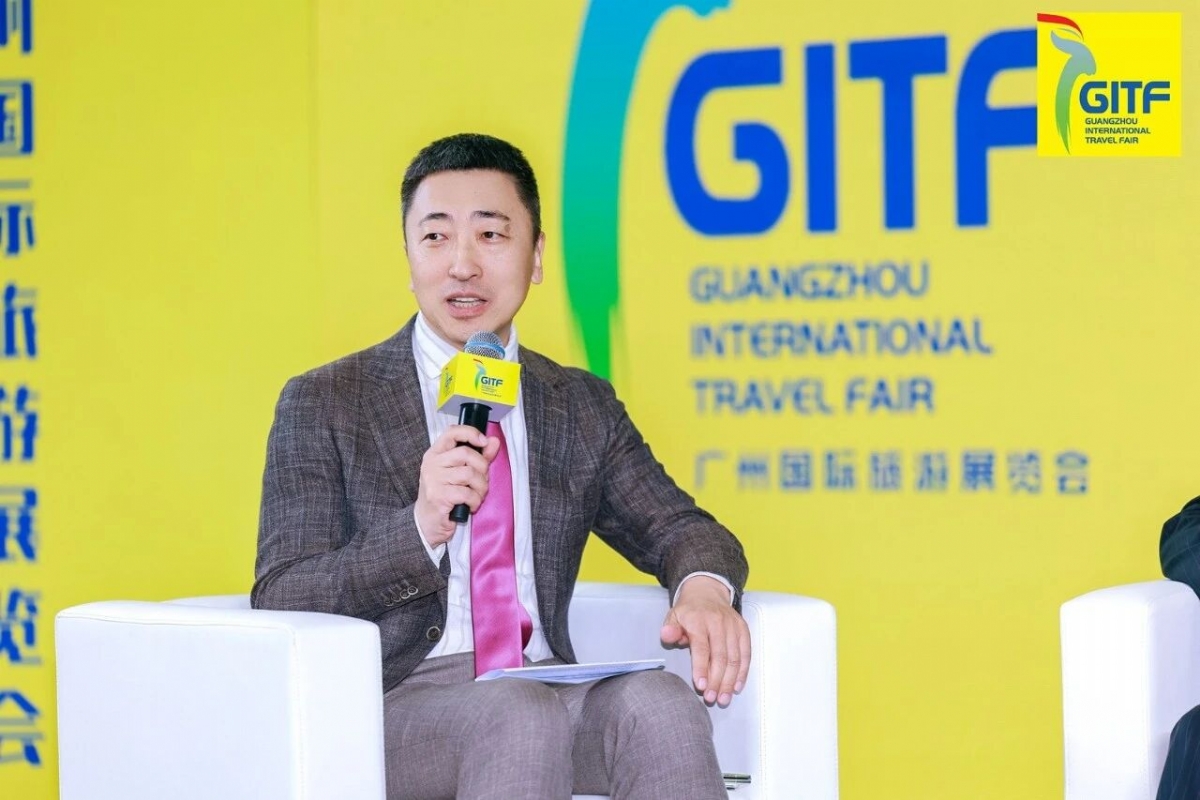
Yang Yu, Director for Asia, Netherlands Board of Tourism and Conventions
In response, Yang Yu summed up: “We must put people first, show warmth, and develop our own unique characteristics—this will enable our nation to break out of Asia and take its place on the world stage.” The goal of attracting tourists may vary, but the end result is the same.
Part.4
Addressing the Core Challenges
How Can Inbound Tourism Achieve More Sustainable Growth?
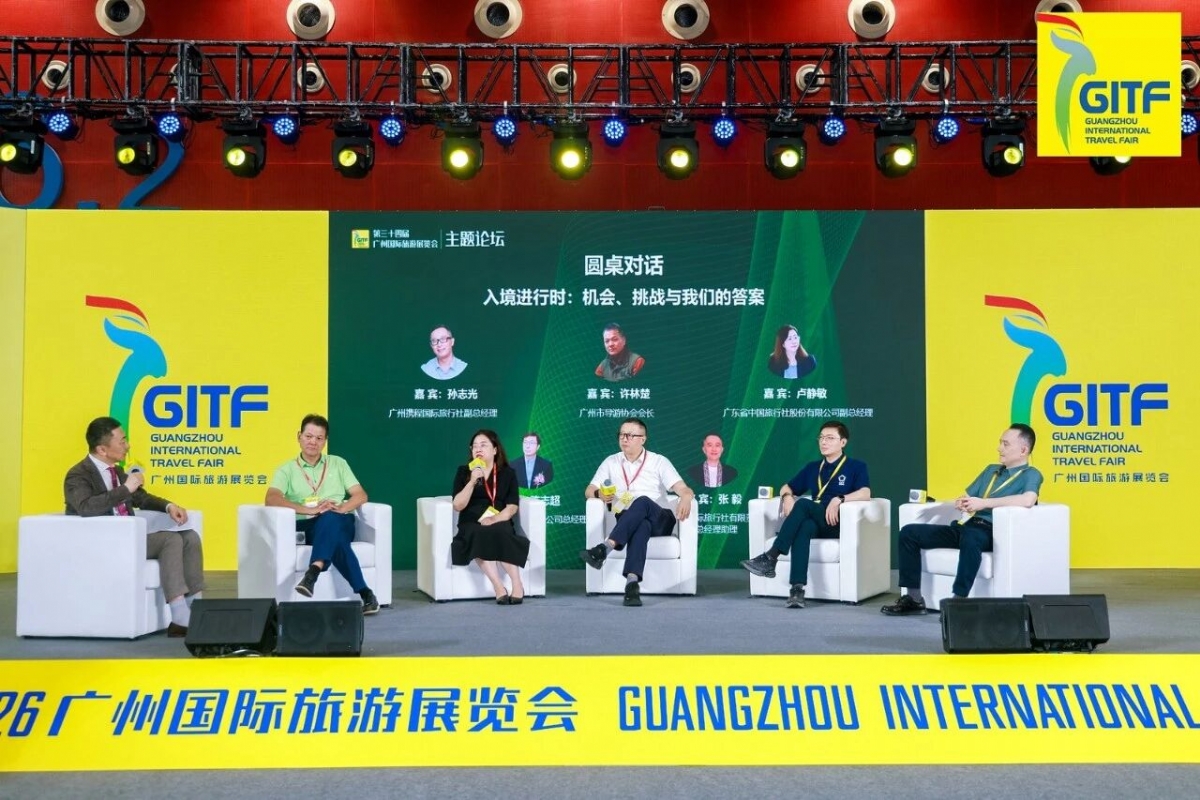
The second roundtable discussion was titled “Inbound Tourism in Progress: Opportunities, Challenges, and Our Responses.” Five industry experts with hands-on experience—Xu Linchu, President of the Guangzhou Tour Guide Association; Sun Zhiguang, Deputy General Manager of Ctrip International Travel Service (Guangzhou); Lu Jingmin, Deputy General Manager of Guangdong China Travel Service Co., Ltd.; Chen Zhichao, Assistant General Manager of Guangzhou Comfort International Travel Service Co., Ltd.; and Zhang Yi, Assistant General Manager of Hunan Huatian International Travel Service Co., Ltd.—engaged in an in-depth discussion.
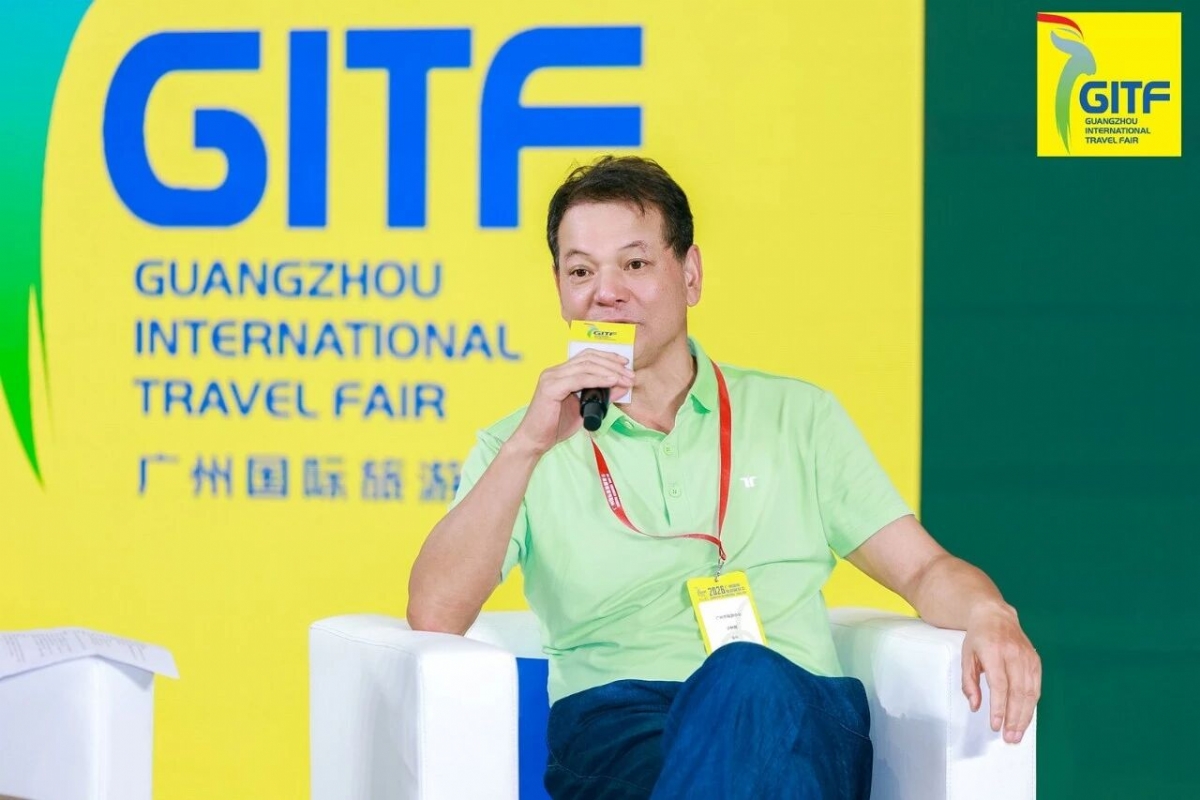
Xu Linchu, President of the Guangzhou Tour Guide Association
As president of the Tour Guide Association, Xu Linchu first pointed out a serious problem: there are currently 660,000 tour guides nationwide, far below the 880,000 recorded in 2019. Of these, 91.4% are Chinese-speaking guides, while foreign-language guides account for only 8.4%, and guides for less common languages are extremely scarce: “Among the 14,000 tour guides in the Guangzhou Tour Guide Association, there isn’t a single Portuguese-speaking guide.” The root causes are as follows: First, tour guides lack technical professional titles, resulting in low social recognition and severe stigmatization; second, regulations require that tour guides be assigned by travel agencies, which blocks employment pathways. I urge society, the government, and universities to immediately launch training programs for less-commonly taught languages.” Taking advantage of this forum as an opportunity, he issued this appeal.

Lu Jingmin, Deputy General Manager of Guangdong China Travel Service Co., Ltd.
Lu Jingmin can certainly relate to this. She admitted, “We’re in dire need of people who speak less common languages, especially Arabic.” She also shared how Guangdong CTS has addressed this challenge: employees are obtaining tour guide certifications, drivers are learning basic English, and the company is leveraging more than a dozen hotels under the group’s umbrella to offer on-site sign-ups for local tours. Additionally, it has taken over the Paris operations of the Guangdong Overseas Promotion Center to promote Guangdong’s resources on the Paris Metro. The key to success lies in warmth: “Provide service with a human touch and share Guangdong’s wonderful resources with the world.”

Sun Zhiguang, Deputy General Manager of Ctrip International Travel Service (Guangzhou)
Sun Zhiguang outlined Ctrip’s 2026 “Bring In + Go Out” strategy, which includes inviting global influencers to explore China and signing Jackie Chan as a brand ambassador; on Trip.com, the company has launched a “China Travel” community section where moderators answer practical questions about payments, ticket purchases, and other topics. He believes that the goal is to “let the world see China, let the world understand China, and let the world experience China.”

Chen Zhichao, Assistant General Manager, Guangzhou Comfort International Travel Service Co., Ltd.
Chen Zhichao, meanwhile, shared a new observation from his more than 20 years in the industry——“reverse charter flights”: chartering flights from Malaysia to bring tourists to Guangzhou. He suggested that the government increase incentives and, at the same time, use social media to let potential tourists know about the accessible services China has put in place for them: “Put yourself in the guests’ shoes and provide service from their perspective.”
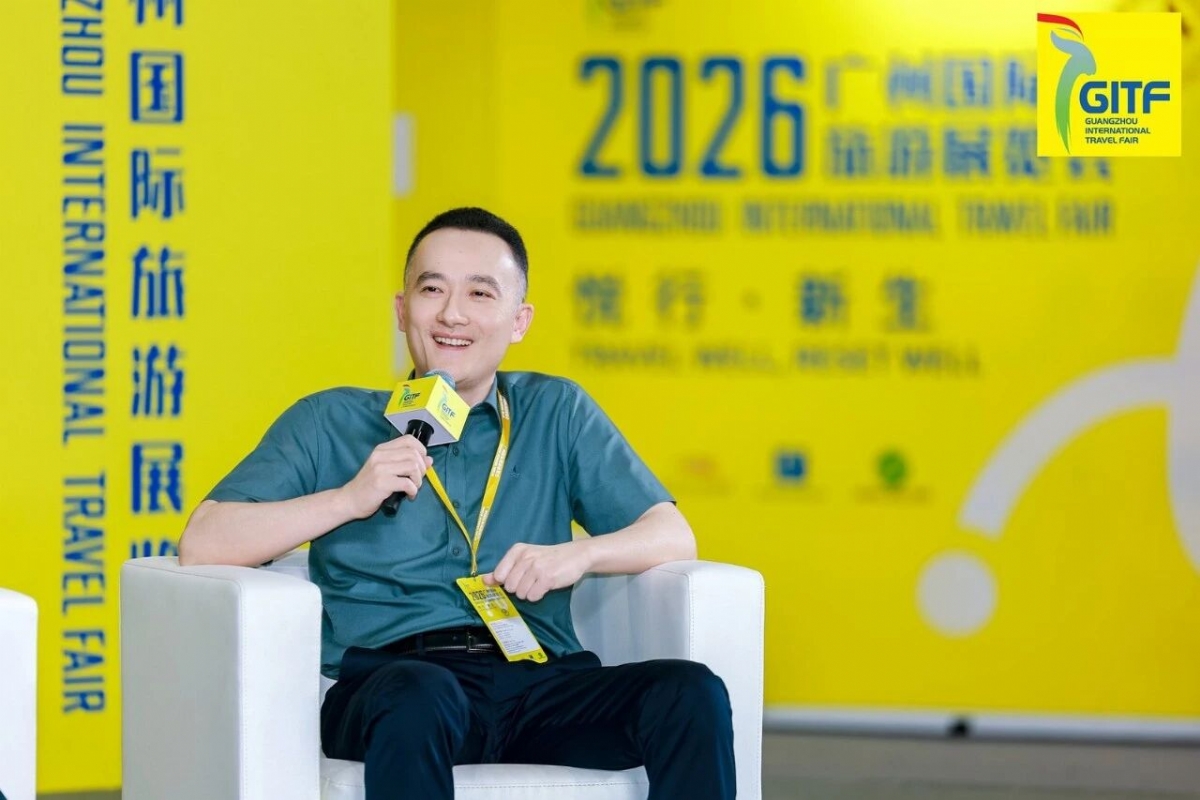
Zhang Yi, Assistant General Manager, Hunan Huatian International Travel Service Co., Ltd.
Zhang Yi revealed that inbound tourists to Hunan have responded enthusiastically to intangible cultural heritage such as Huagu Opera, Hunan embroidery, and paper-cutting, and have given overwhelmingly positive reviews after experiencing them firsthand. In 2026, Hunan Huatian—which is focusing on expanding its reach in Russian-speaking countries (Russia, Belarus, and Kazakhstan)—has already achieved a 20% increase in visitor numbers. He stated, “Local, distinctive cultural characteristics are the core elements that make tourists want to stay longer and return more often.”
From the shortage of tour guides to the challenges of less-commonly taught languages, and from “reverse charter flights” to intangible cultural heritage experiences, this roundtable discussion did not shy away from real issues nor did it dwell on grand narratives. Ultimately, every guest’s response pointed in the same direction—the long-term development of inbound tourism depends not only on policy incentives but also on the warmth found in service details, the depth of cultural experiences, and the ability to empathize with others.
Policies attract visitors, but it is the warmth of the people that keeps them coming back. When the industry is willing to confront its challenges head-on and respond with sincerity, the next golden decade of inbound tourism will have already begun.
【END】
Address: Room 1510, West Tower, Poly Trade Center, No.1000 Xingang East Road, Haizhu District, Guangzhou, China
 沪公网安备31011502400921